
Causal Manipulation of
Neural Computations
Identifying the neural correlates of cognitive control is only a first step—understanding how these circuits causally contribute to behavior requires direct manipulation.
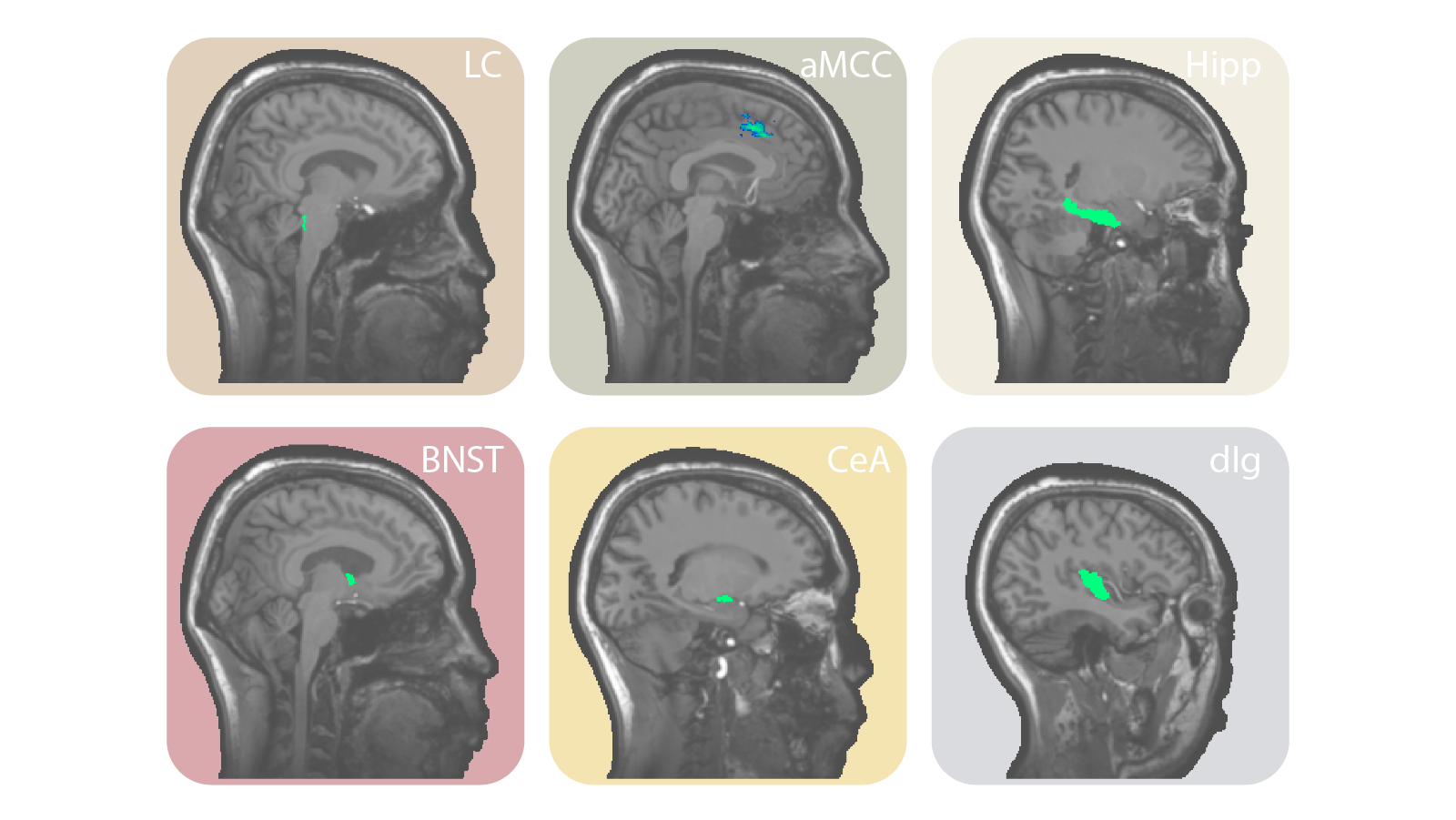
We probe the neural circuits underlying cognitive control using transcranial ultrasound stimulation (TUS), closed-loop EEG-TMS, and simultaneous EEG-fMRI, asking which brain regions and computations are necessary for flexible, context-dependent behavior.
How do we enhance and perturb neural circuits?
Related publications
Kikumoto, A. & Shibata, K. (in prep). Testing Flexible Error Monitoring in Context-Dependent Tasks with Transcranial Ultrasound Stimulation.
Kikumoto, A., Lorenc, E., Srinivasan, A., & Badre, D. (in prep). Mapping Context Integration in Brain Circuits Using Simultaneous EEG–MRI.
Related Grants
NIH (NIMH) R21 (submitted, 2025)
Closed-loop TMS–EEG stimulation for Causal Perturbation of Control Representations.
Role: Co-Investigator (PI: David Badre)
Closed-loop TMS–EEG stimulation for Causal Perturbation of Control Representations.
Role: Co-Investigator (PI: David Badre)
Zimmermann Innovation Award (awarded, 2026)
Modulating Interoceptive Circuits to Enhance Fear Regulation in Anxiety.
Role: Key Personnel (PI: Frederike Petzschner)
Modulating Interoceptive Circuits to Enhance Fear Regulation in Anxiety.
Role: Key Personnel (PI: Frederike Petzschner)