
Flexible Use of Internal Representations
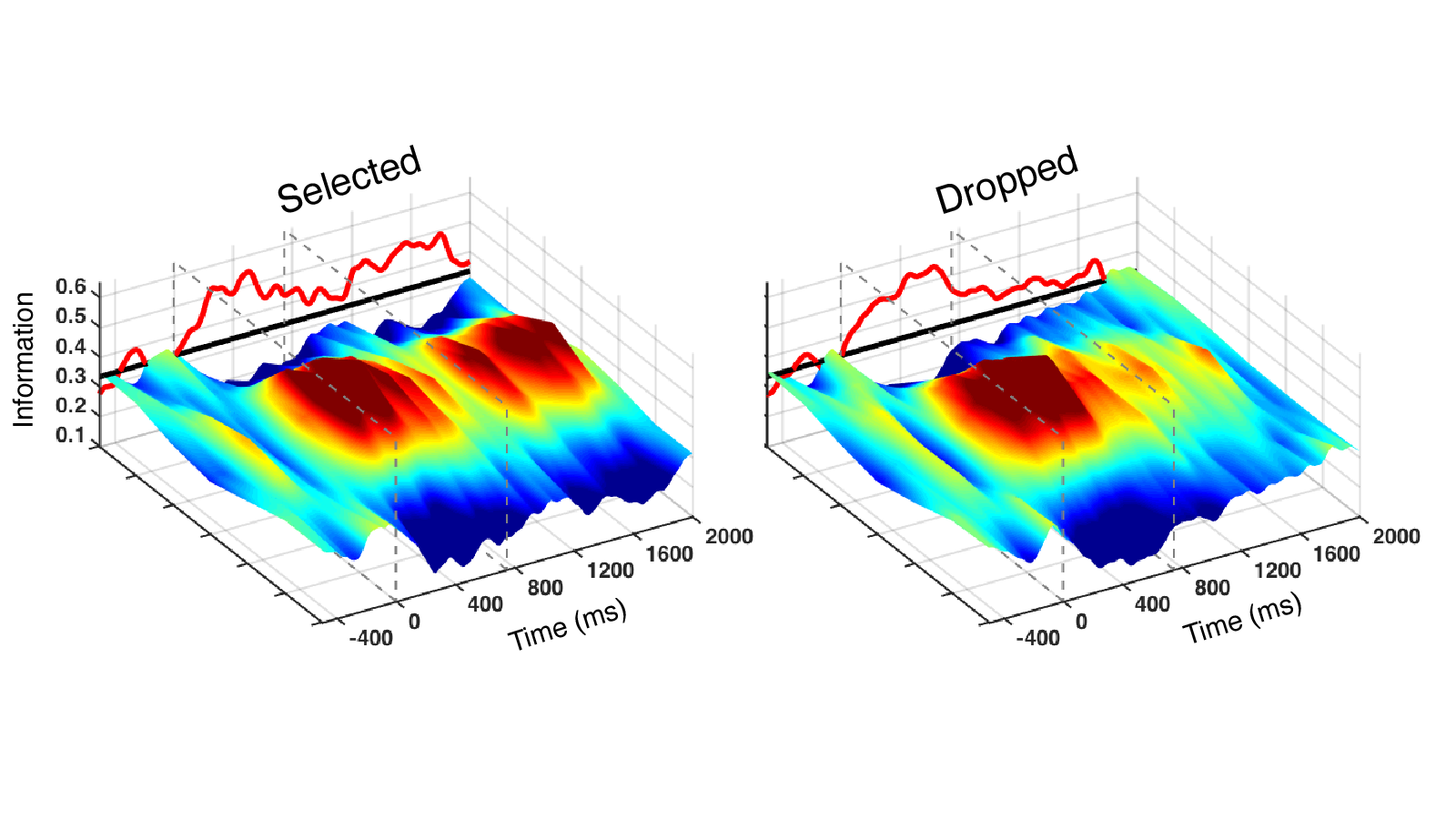
How do we control memory for flexible use?
Flexible behavior requires information to be selectively maintained and transformed while stored knowledge is retrieved at the right moment to guide ongoing cognition.
We study how the brain controls the state of memory representations—from the gating and transformation of working memory contents to the coordinated retrieval of useful (or interfering) long-term memory in service of current goals.
Related publications
Tsubomi, H., Fukuda, K., Kikumoto, A., Mayr, U., & Vogel, E. K. (2024). Task termination triggers spontaneous removal of information from visual working memory. Psychological Science.
Kikumoto, A., Mayr, U., & Badre, D. (2022). The role of conjunctive representations in prioritizing and selecting planned actions. eLife, 11:e80153.
Kikumoto, A., Sameshima, T., & Mayr, U. (2022). The role of conjunctive representations in stopping actions. Psychological Science.
Moss, M. E., Kikumoto, A., & Mayr, U. (2020). Does conflict resolution rely on working memory? JEP: Learning, Memory, and Cognition, 46(12), 2410–2426.
Kikumoto, A., & Mayr, U. (2017). The nature of task-set representations in working memory. Journal of Cognitive Neuroscience, 29(11), 1950–1961.